

Tomb of the Mask NETFLIX
Netflix, Inc.
I spent time with Tomb of the Mask NETFLIX as a quick-play arcade game, and its appeal became clear almost immediately: it turns movement into a chain of split-second decisions. The basic idea is easy to understand, but the narrow spaces and sudden hazards make each run feel more demanding than the first few moments suggest. I could pick it up for a short break, fail, restart, and still feel that the next attempt might go better.
This is a game from Netflix, Inc. in the arcade category, and it is free to play for anyone looking for a compact labyrinth challenge. Its Everyone age rating makes it approachable for a broad audience, although the speed and repeated failures may be more important considerations than the rating itself for younger players. The game has reached over 100 thousand installs and holds a 4.8 average from around 2.4 thousand ratings, which matches my impression that its simple controls and immediate action are easy to appreciate.
How the first goals create momentum
The opening experience works because it gives me a clear objective without burying it under instructions. I enter a maze-like space, move through it, and try to survive long enough to make progress. There is no need to learn a complicated control scheme before the game becomes interesting. That directness is valuable on a phone, where I may be playing while waiting for a bus or taking a short break between tasks.
The early goals are less about building a character or managing a large collection of equipment and more about understanding movement. I quickly learn that choosing a direction is only half the decision; I also need to think about where that movement will leave me. A corridor can look safe until it becomes a trap, and a route that seems longer may give me more room to react. That relationship between movement and positioning is what keeps the labyrinth format from feeling like a simple race.
I found the first attempts useful even when they ended quickly. A failed run usually showed me something specific: I had committed too early, ignored the shape of the maze, or reacted to the immediate danger instead of preparing for the next turn. That kind of failure is much more satisfying than losing because of an unclear rule. The game communicates its central lesson through play rather than through long explanations.
Related News






One practical tip is to avoid treating every opening as an invitation to move immediately. I had better results when I paused for a moment and looked at the available paths before committing. That small habit matters because the game rewards anticipation more than frantic tapping. It also makes the early stages feel like a learning process rather than a test of pure reflex.
The simplicity does have a trade-off. Players who expect a story, a large roster of characters, or a detailed customization system may find the initial goals too narrow. This is primarily about navigating dangerous spaces and improving execution. I would recommend it first to someone who enjoys arcade games built around repeated attempts, not to someone searching for a long-form adventure with extensive narrative development.
What progress feels like during repeated runs
The strongest progress signal is personal improvement. I began to recognize patterns in the way I moved, and I became more deliberate about setting up the next section of a route. Even when the game did not hand me a dramatic reward, reaching a little farther or surviving a situation that had previously stopped me felt meaningful. That is a classic arcade strength: the player’s memory becomes part of the progression system.
Gallery
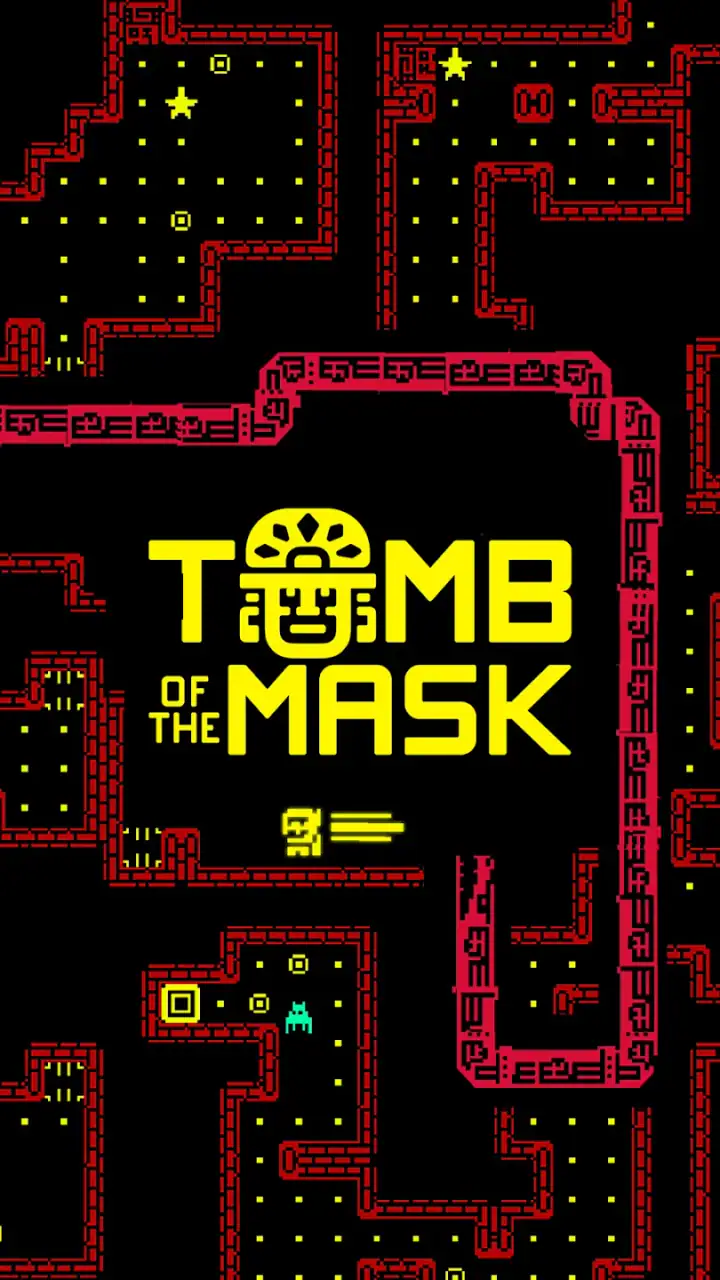
Unlocks and goals are most effective here when they give a run a reason to continue without replacing the core challenge. I did not need a complicated checklist to understand what I was working toward. The immediate target was always readable, while the larger motivation came from wanting to see whether I could handle the next stretch. This keeps the experience focused and avoids turning a short arcade session into administrative work.
For a more reliable improvement loop, I recommend changing one habit at a time. On one attempt, I might focus on entering turns with more space. On another, I might concentrate on avoiding rushed decisions. Trying to fix every mistake at once makes the game feel chaotic, while isolating one problem gives each restart a purpose. This is one of the less obvious strengths of the design: the short format makes experimentation painless.
The game also suits players who like measurable mastery without needing a large amount of free time. A few minutes can produce a complete attempt, and the restart rhythm means I do not have to remember a complicated plot or reconstruct a long sequence of events after putting the phone down. That makes it easier to return later, especially when I want something active rather than a passive distraction.
Still, the progress can feel modest if I am looking for constant rewards. The satisfaction comes mainly from better decisions and longer survival, so players who need frequent unlock screens or a strong collection loop may lose interest. The game’s approach is cleaner but also less layered than progression-heavy arcade alternatives. It asks me to value competence, not just accumulation.
Why the difficulty curve demands patience
The difficulty works best when I stop assuming that speed is always the answer. As the labyrinth challenge becomes more demanding, the important skill shifts from simply moving through open space to reading danger before it closes in. I had to balance quick reactions with restraint. Moving too slowly can be just as damaging as rushing, because hesitation may leave me in a worse position for the next decision.
That curve creates a useful distinction between a first-time player and an experienced one. A newcomer can understand the objective quickly, but understanding is not the same as control. The game’s challenge comes from applying the rule consistently when the screen becomes more stressful. I appreciated that gap because it gave me something concrete to improve, although it also means casual players may reach a point where the experience feels demanding rather than relaxing.
My best approach was to read the maze in sections. Instead of planning an entire run in my head, I looked for the next safe commitment and then reassessed. This reduced the number of mistakes caused by overplanning. It also helped me notice that a successful route is not always the most direct one. Creating room for the next turn can matter more than saving a moment now.
The game is not ideal for people who dislike repetition. Failure is part of the learning structure, and the same basic action of restarting and trying again can become tiring if I am not in the mood to practice. I would choose a slower puzzle game when I want time to consider every move without pressure. I would choose this one when I want the pressure itself to sharpen my attention.
Another useful distinction is between difficulty and unfairness. In my experience, the challenge felt most manageable when I treated each mistake as information. However, players who prefer generous checkpoints or forgiving recovery may find the arcade format harsh. The game’s appeal depends on accepting that a run can end quickly and that improvement may require several attempts rather than one careful solution.
What keeps the pace engaging, and where it pushes too hard
The pacing is built around immediacy. There is little downtime between deciding, moving, reacting, and trying again. That makes the game particularly effective in short sessions because it does not require a long warm-up. I could play for a few minutes and feel that I had actively done something, rather than merely browsing through menus or waiting for a match to begin.
A realistic everyday use case is a short commute with a few stops or a break while waiting for an appointment. I would play one or two attempts, put the phone away, and return later without losing the thread. The game’s compact structure supports that pattern better than a large role-playing game, where stopping in the middle of a task can make returning feel like work.
The same pace can create retention pressure. Because a failed attempt is followed so quickly by another opportunity, I often felt tempted to continue until I corrected the mistake. That can be motivating, but it can also turn a planned five-minute session into a longer stretch. I recommend deciding beforehand how many attempts I want to make, especially when playing late at night or during a break that has a fixed end.
This pressure is not based on a complicated social system or a heavy schedule. It comes from the immediate gap between failure and another chance. That is an important difference from games that retain players through daily tasks or elaborate reward calendars. Here, the hook is the unfinished movement problem in front of me. If I enjoy closing that gap through practice, the design feels compelling; if I prefer a clearly timed session, it may feel insistent.
The pacing also affects accessibility in a practical sense. The Everyone rating communicates broad suitability, but it does not mean every player will find the action comfortable. Anyone sensitive to rapid decisions, repeated restarts, or visually busy maze situations should approach it as a focused arcade challenge rather than a calm pastime. I would not use it when I want to unwind completely, but I would use it when I want a small burst of concentration.
How it compares with familiar arcade alternatives
Compared with endless runners, this game places more emphasis on route reading and positioning than on maintaining a forward rhythm. An endless runner can often be understood as a sequence of jumps, slides, and lane changes, while this experience makes the shape of the labyrinth itself part of the challenge. If I enjoy planning a turn before it arrives, this is likely the better fit.
Compared with traditional puzzle games, it is more immediate and less forgiving. I do not get the same quiet space to examine a board for several minutes. The reward is a stronger sense of momentum, but the cost is that mistakes can happen before I have fully processed the situation. Players who want pure logic should look elsewhere; players who like logic mixed with reflexes will find a more suitable balance here.
It also differs from progression-heavy arcade games that rely on upgrades to make later attempts easier. The central satisfaction comes from what I learn and how I move, not from turning the character into a stronger version through extensive preparation. That makes the game easier to understand and quicker to enter, but it may feel less generous to anyone who prefers progression to soften the challenge.
The Netflix connection is relevant for people already looking for games from that developer, but I would not choose it solely because of the name. The important question is whether I enjoy fast labyrinth navigation and repeated improvement. The game stands on those qualities by itself. Its current version is 1.1, and it runs on devices using Android 10 or later, so checking compatibility before downloading is sensible if the phone is older.
It is free, which removes the usual price barrier for trying a short arcade game. That makes experimentation easy, especially for someone unsure whether this particular style of challenge will suit them. I would still judge its value by how long the movement loop stays interesting, not by the absence of an upfront cost. A free game can still be the wrong choice if its core rhythm does not match my preferences.
My verdict on goals, challenge, and long-term appeal
After playing it, I see the progression as deliberately focused. The early goals teach me to move with intention, the progress signals come from reaching farther and making fewer mistakes, and the difficulty curve asks me to replace impulse with anticipation. The pacing then turns each failure into an immediate invitation to apply what I learned. That is a coherent structure for an arcade game, even though it does not offer the breadth of a larger adventure.
The real progression is the improvement of my decisions, not the accumulation of complicated systems. That is both the game’s clearest strength and its main limitation. Players who enjoy mastering a compact mechanic will probably appreciate the clean focus. Players who need story chapters, extensive unlocks, or a wide range of activities may feel that the experience runs out of variety sooner.
I would recommend it to fans of quick arcade sessions, maze challenges, and games where a failed attempt teaches something useful. It is also a good choice for someone who wants an active phone game that can be played in small pieces without remembering a long narrative. I would skip it if I am searching for a relaxing puzzle, a deep character-building system, or a game that lets me progress mainly by collecting upgrades.
Its strongest everyday advantage is convenience without sacrificing concentration. I can start quickly, understand the immediate goal, and stop after an attempt. Its biggest friction is that the same fast restart loop can encourage me to keep playing after the session I intended. Used in short bursts, it feels sharp and satisfying; played when I am already impatient, it can become frustrating.
Overall, this is a focused arcade release rather than an all-purpose mobile game. The 4.8 average from around 2.4 thousand ratings suggests that its straightforward challenge has connected with many players, and I understand why. I would recommend downloading it for the movement and the maze-solving pressure, not for features it does not need. When I want a compact test of timing, route awareness, and self-control, it earns a place on my phone.
FAQs for Tomb of the Mask NETFLIX
What is Tomb of the Mask NETFLIX?
Tomb of the Mask NETFLIX is an arcade-style action game available through the Netflix Games catalog. You guide a masked character through maze-like tombs filled with corridors, traps, enemies, collectibles, and fast-moving challenges. The character slides automatically until hitting a wall, so success depends on quickly choosing the right direction and planning your next move before the screen becomes dangerous.
Do I need a Netflix subscription to play Tomb of the Mask NETFLIX?
Yes. This edition is intended for Netflix members and normally requires an active Netflix subscription and a compatible account to access the game. It does not use the usual system of separate in-game purchases or advertisements associated with many free mobile games. Availability can depend on your country, device, operating system, and the current Netflix Games catalog.
How does the gameplay work?
The controls are simple to learn but become demanding very quickly. Swipe in a direction to send the character sliding through the maze, then use walls to stop and redirect the movement. You must collect items, avoid hazards, defeat or evade enemies, and reach objectives while reacting quickly. The combination of automatic movement and compact levels makes timing and route selection especially important.
Does Tomb of the Mask NETFLIX contain ads or in-app purchases?
The Netflix version is designed to provide a more complete mobile gaming experience without traditional advertising interruptions or separate in-app purchase offers. Access is generally included with the eligible Netflix membership rather than being monetized through power-ups, premium currency, or paid level packs. However, you still need internet access for account verification or downloading, and Netflix’s membership terms and game availability may apply.
Is Tomb of the Mask NETFLIX suitable for all players and devices?
The game is easy to start because it uses swipe controls, but its rapid pace, traps, and increasingly complex layouts can be challenging for younger players or anyone who prefers relaxed gameplay. It is best suited to players who enjoy short arcade sessions and repeating levels to improve. Before downloading, check Netflix’s supported-device list, available storage, operating-system requirements, and regional availability.
Pros
- Fast
- responsive controls make maze movement feel precise.
- Procedurally changing levels keep runs from feeling completely predictable.
- Collectibles and power-ups add variety beyond simply reaching the exit.
- Short stages work well for quick gaming sessions.
- Netflix access removes ads and separate in-game purchase pressure.
Cons
- Requires an active Netflix subscription to play.
- Later stages can become frustratingly difficult without much warning.
- Repeated visual themes may make extended sessions feel monotonous.
- Mistakes can feel costly when hazards appear with limited reaction time.
- Offline availability and save behavior may vary across devices or updates.


